City Museum
The British Museum, located in the Bloomsbury area of London, United Kingdom, is a public institution dedicated to human history, art and culture.
The British Museum, located in the Bloomsbury area of London, United Kingdom, is a public institution dedicated to human history, art and culture.
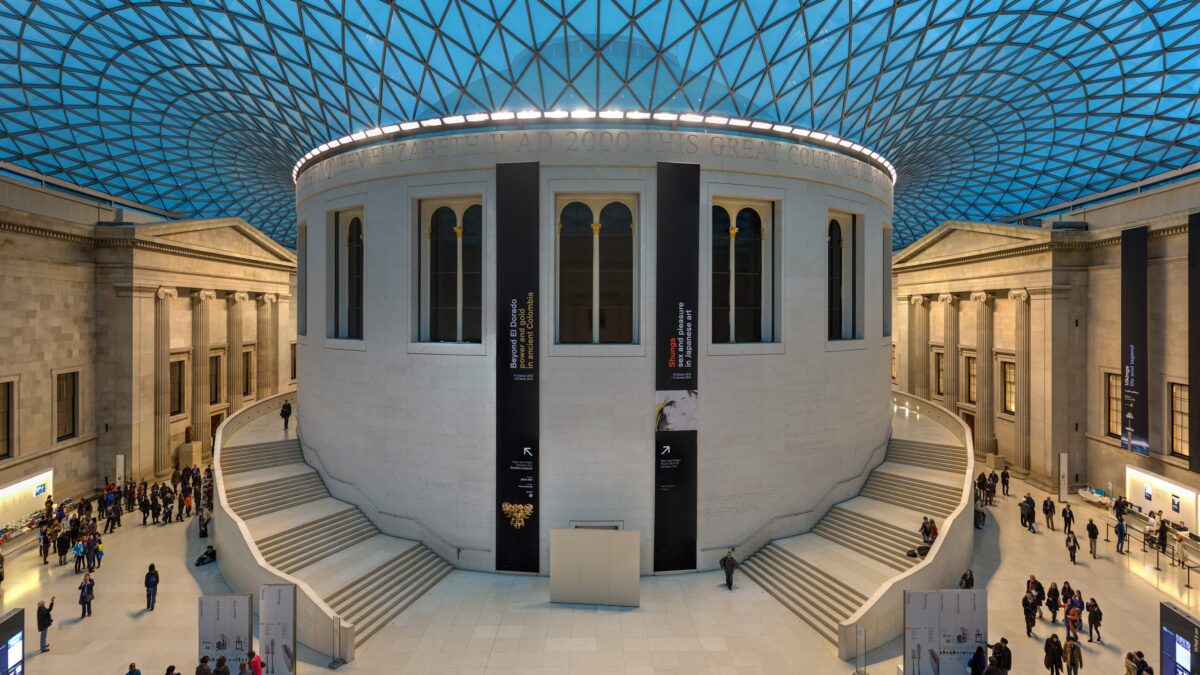
Its permanent collection numbers some 8 million works, and is among the largest and most comprehensive in existence having been widely sourced during the era of the British Empire, and documenting the story of human culture from its beginnings to the present.
The British Museum was established in 1753, largely based on the collections of the physician and scientist Sir Hans Sloane. The museum first opened to the public on 15 January 1759, in Montagu House, on the site of the current building. Its expansion over the following two and a half centuries was largely a result of expanding British colonisation and has resulted in the creation of several branch institutions, the first being the British Museum of Natural History in South Kensington in 1881 (it is nowadays simply called the Natural History Museum, and is separate and independent).
 On 7 June 1753, King George II gave his formal assent to the Act of Parliament which established the British Museum. The British Museum Act 1753 also added two other libraries to the Sloane collection, namely the Cottonian Library, assembled by Sir Robert Cotton, dated back to Elizabethan times and the Harleian library, the collection of the Earls of Oxford. They were joined in 1757 by the “Old Royal Library”, now the Royal manuscripts, assembled by various British monarchs. Together these four “foundation collections” included many of the most treasured books now in the British Library including the Lindisfarne Gospels and the sole surviving manuscript of Beowulf.
 Today the museum no longer houses collections of natural history, and the books and manuscripts it once held now form part of the independent British Library. The museum nevertheless preserves its universality in its collections of artefacts representing the cultures of the world, ancient and modern. The original 1753 collection has grown to over thirteen million objects at the British Museum, 70 million at the Natural History Museum and 150 million at the British Library.
In 2013 the museum received a record 6.7 million visitors, an increase of 20% from the previous year. Popular exhibitions including “Life and Death in Pompeii and Herculaneum” and “Ice Age Art” are credited with helping fuel the increase in visitors. Plans were announced in September 2014 to recreate the entire building along with all exhibits in the video game Minecraft in conjunction with members of the public.